Japanese
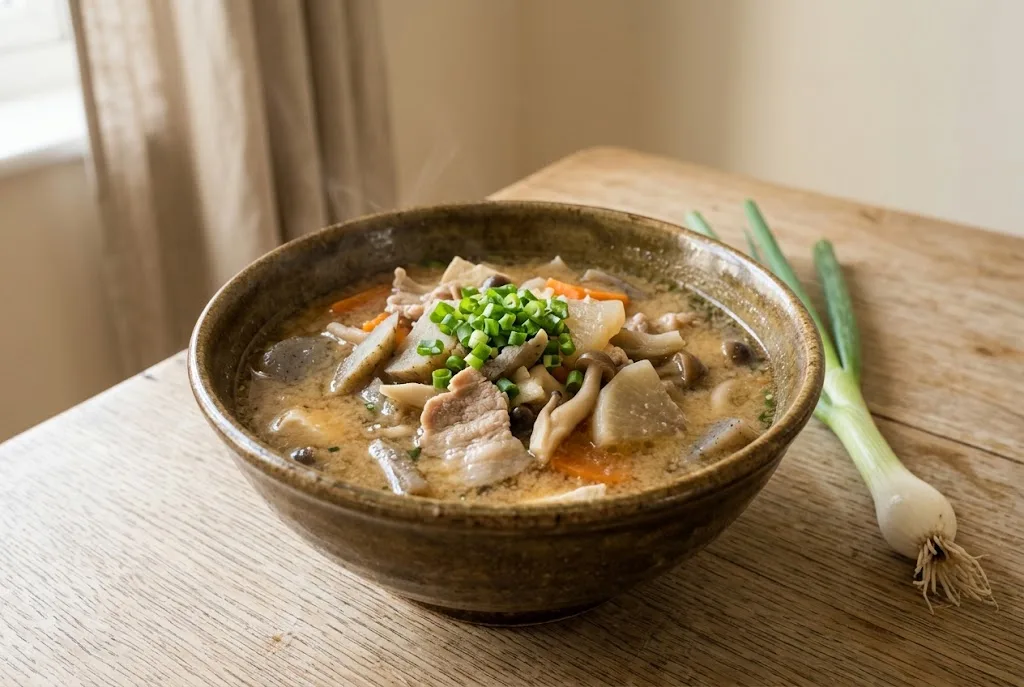
Tonjiru (Pork and Vegetable Miso Soup)
Print or share this recipe
Tonjiru (Pork and Vegetable Miso Soup) is Japanese home cooking, eaten at lunch and dinner. On the plate it is the soup. Below is what usually sits beside it, what it does and does not contain, and what else to cook once you have made it.
Ingredients
The quantities follow this count.
How to cook it
-
Cut the pork, daikon, carrot, gobo, and konnyaku into bite-size pieces.
-
Cook the pork in a dry pot over medium heat until browned, about 3 minutes.
-
Add the vegetables and stir 2 minutes, then pour in the dashi.
-
Simmer until the vegetables are tender, about 18 minutes.
-
Whisk a ladle of the hot broth into the miso until smooth, stir it back in without boiling hard, and top with sliced scallions.
Watch how to cook Tonjiru (Pork and Vegetable Miso Soup)
Someone making it start to finish, so you can see what the steps look like.

Serve it with
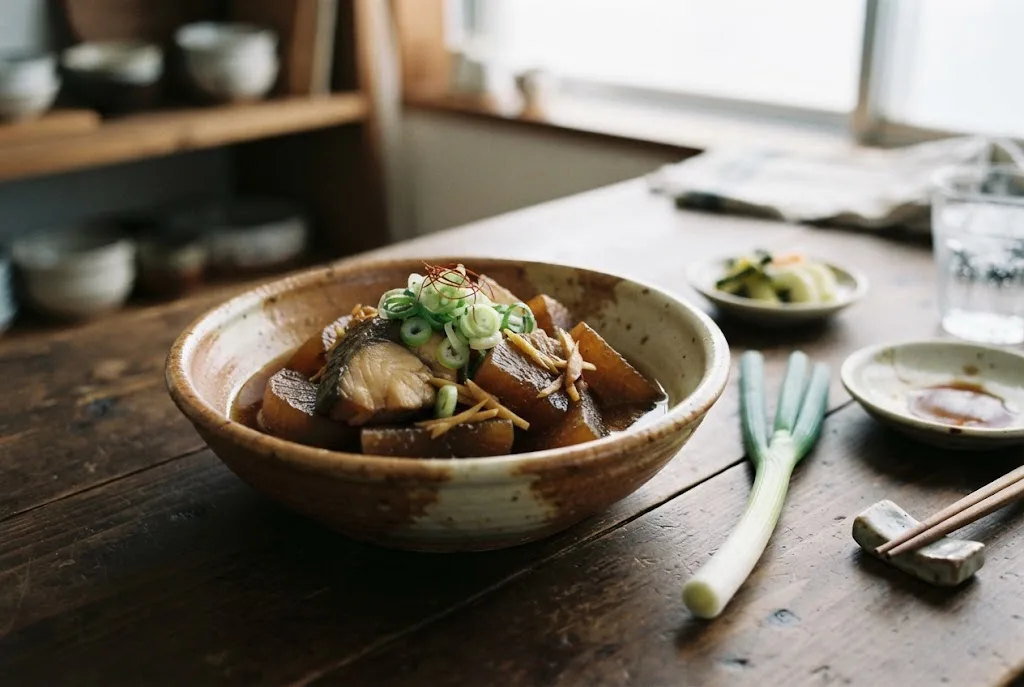
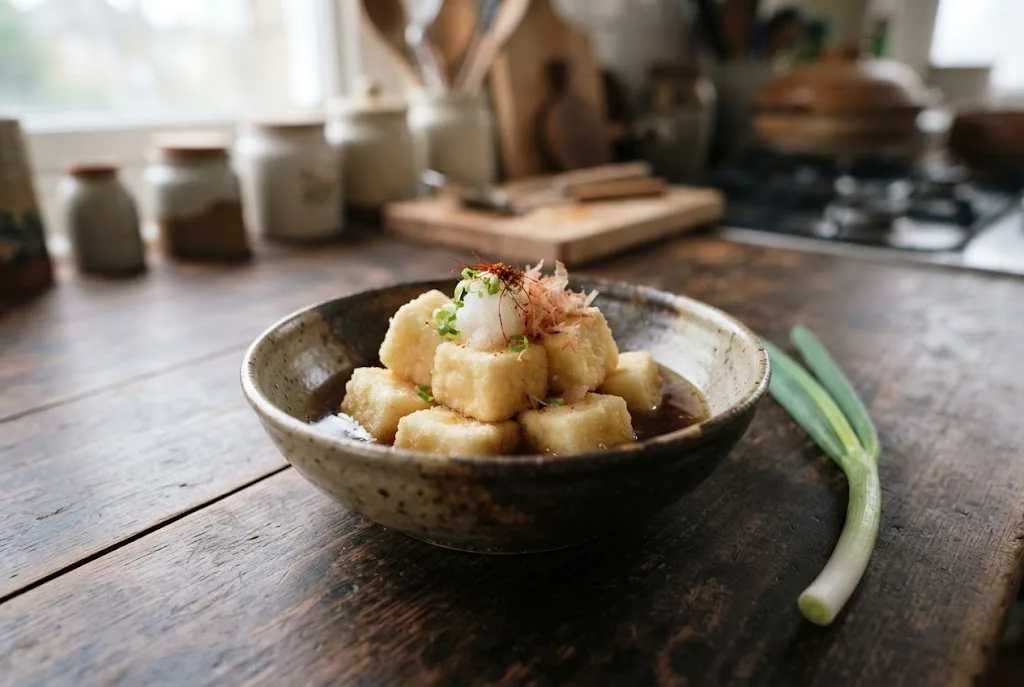
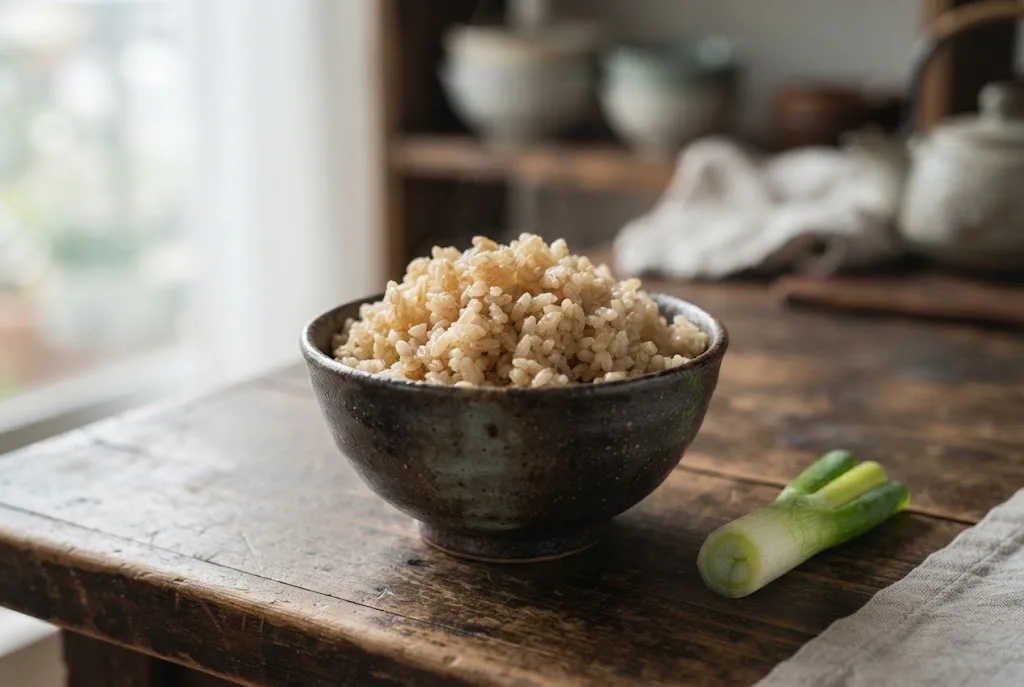
A Japanese dinner is a plate rather than a single dish. These are the courses that normally sit beside Tonjiru (Pork and Vegetable Miso Soup), read from the same composition Dinejot builds a real meal from.
-
The dish at the centre
-
The cooked vegetable
-
What it is eaten with
-
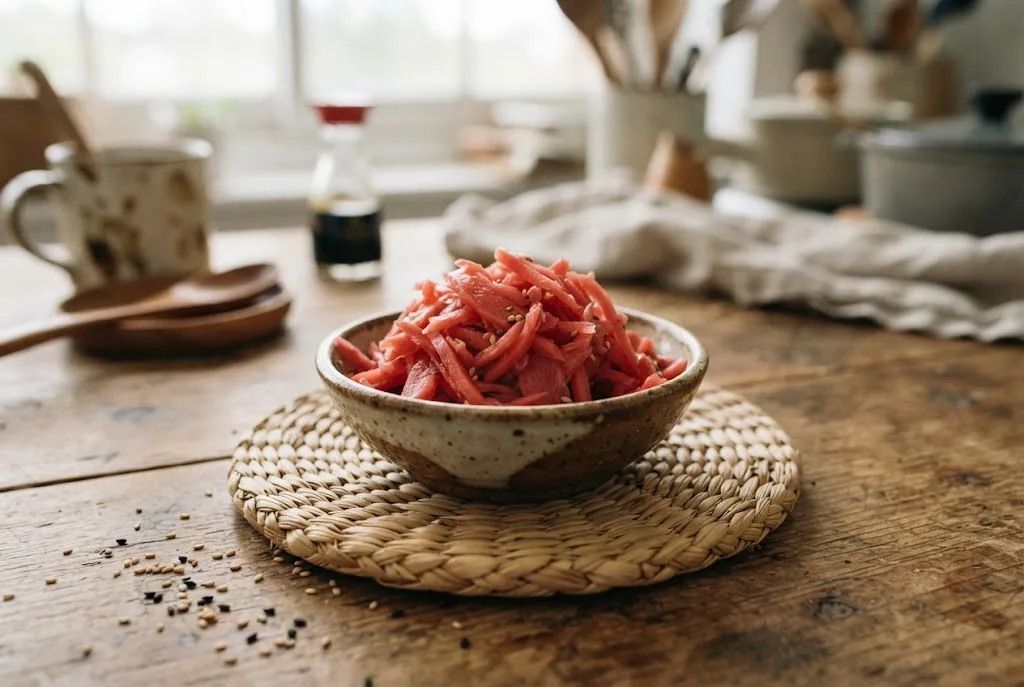
The sharp little thing
Safe at your table
Dinejot tracks ten allergens and tags every one of them by hand, so the absences below are as deliberate as the presences. Tonjiru (Pork and Vegetable Miso Soup) carries soy and fish. It is free of the remaining 8 allergens on that list.
| Allergen | In this dish | Cook this instead |
|---|---|---|
| Peanuts | No | |
| Tree nuts | No | |
| Dairy | No | |
| Gluten | No | |
| Shellfish | No | |
| Eggs | No | |
| Soy | Yes | Asari no Osuimono (Clear Clam Soup) |
| Fish | Yes | Asari no Osuimono (Clear Clam Soup) |
| Sesame | No | |
| Coconut | No |
These tags are set by a person rather than inferred from an ingredient list, and they describe the recipe as written here. Read the labels on whatever you actually buy.
What it brings to the plate
Estimated, per serving
- Calories
- 340 kcal
- Protein
- 8 g
- Carbs
- 16 g
- Fat
- 27 g
- Fiber
- 4 g
- Sugar
- 4 g
- Sodium
- 540 mg
- Saturated fat
- 10 g
Estimated values. Actual nutrition varies with ingredients, brands, and how you cook.
When to cook it
Tonjiru (Pork and Vegetable Miso Soup) takes about 30 minutes from a cold stove to the table, and the cooking itself is a fair bit of work. It is eaten at lunch and dinner. It is at its best in the fall and winter, which is when what goes into it is worth buying.
Cooked this? Show everyone.
Comments
Sign in to leave a note for the next cook.
No comments yet. Be the first to share your thoughts.
Cook this with your whole family
Dinejot plans breakfast, lunch and dinner as whole plates, built around the cooking you call home and filtered for the allergies at your table.
Meal suggestions support your goals. They are not medical advice. Please ask your doctor about your family's health needs.