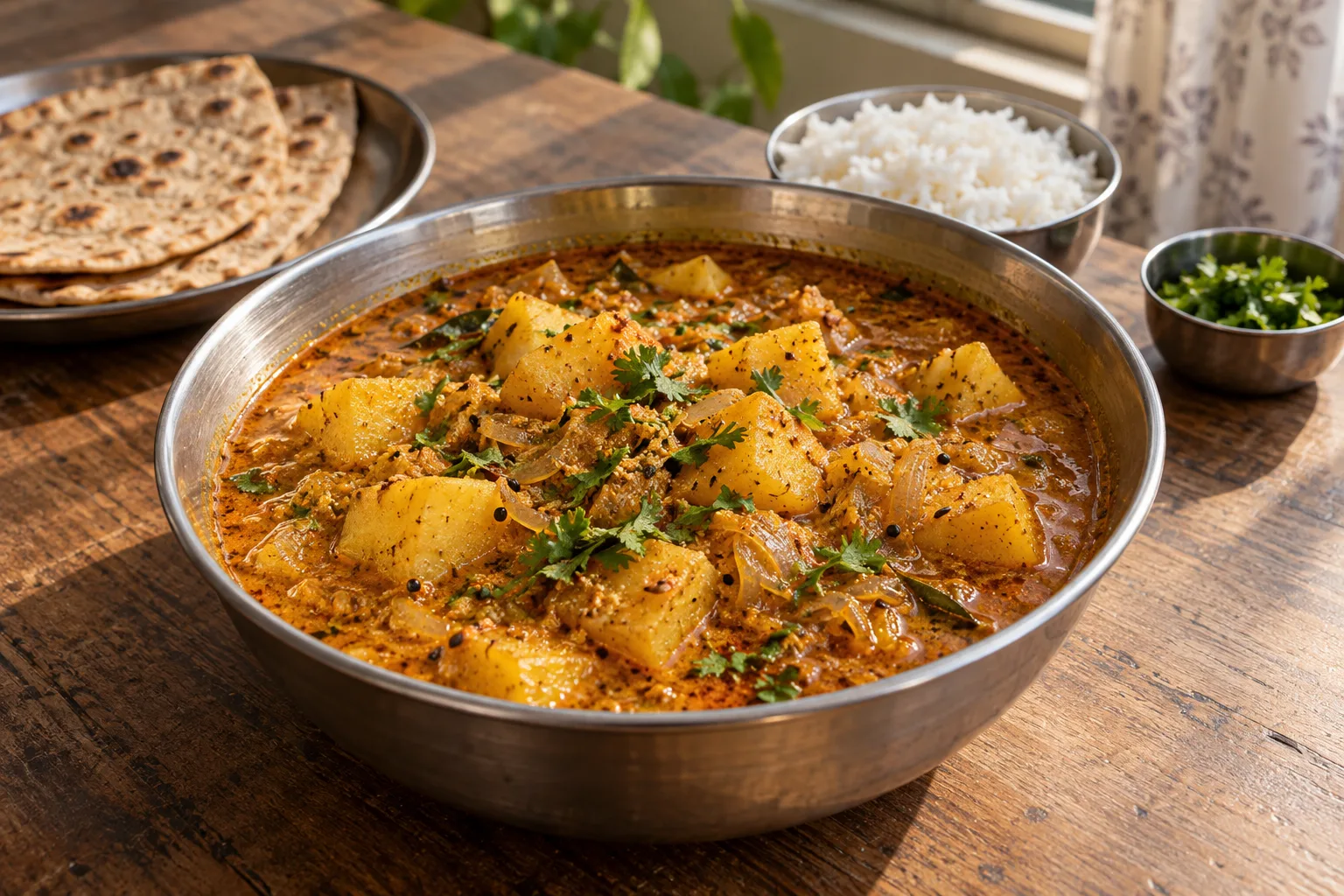
West Indian
Batata Rassa (Thin Potato-Onion Gravy)
Print or share this recipe
Batata Rassa (Thin Potato-Onion Gravy) is West Indian home cooking, eaten at lunch and dinner. On the plate it is the dish at the centre and the cooked vegetable. Below is what usually sits beside it, what it does and does not contain, and what else to cook once you have made it.
Ingredients
The quantities follow this count.
How to cook it
-
Peel the potatoes, cut them into rough 1 inch cubes and hold them in a bowl of water so the cut faces do not darken while you make the paste.
-
Grind the grated coconut, half the chopped onion and the garlic cloves with 3 tablespoons of water to a smooth wet paste; this paste is the whole body of the gravy, so take it past the gritty stage.
-
Heat the oil in a pot over medium heat, add the mustard seeds and wait for them to pop, then add the cumin seeds, curry leaves and asafoetida and let them crackle for 20 seconds.
-
Add the rest of the chopped onion and fry 5 minutes over medium heat until it is soft and just starting to brown at the edges.
-
Stir in the coconut paste and cook 4 minutes over medium heat, scraping the base so it cannot catch, until the paste darkens to a dull gold and the raw coconut smell is gone.
-
Add the turmeric, red chili powder and goda masala, cook 1 minute, then tip in the drained potatoes along with the salt and the water.
-
Bring it to a boil, then simmer uncovered 15 minutes over medium low heat until a potato cube breaks under light pressure from a spoon and the gravy is still thin enough to pour, with a film of red oil on the surface.
-
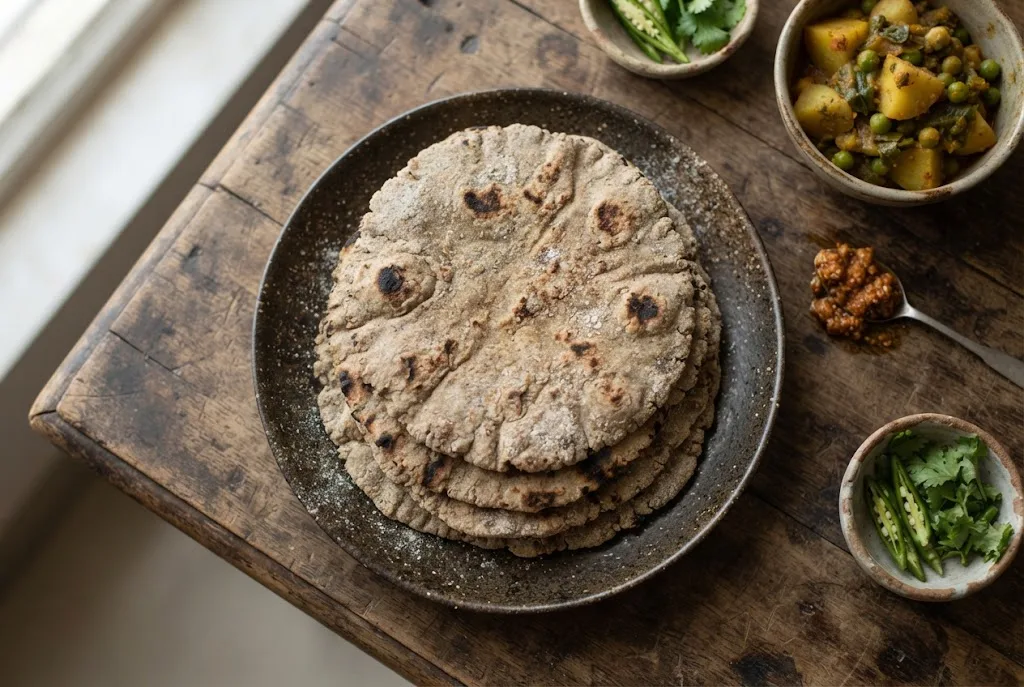
Stir through the chopped cilantro and serve hot with chapati or bhakri, and a small mound of steamed rice on the side to take the last of the gravy.
Watch how to cook Batata Rassa (Thin Potato-Onion Gravy)
Someone making it start to finish, so you can see what the steps look like.


Serve it with
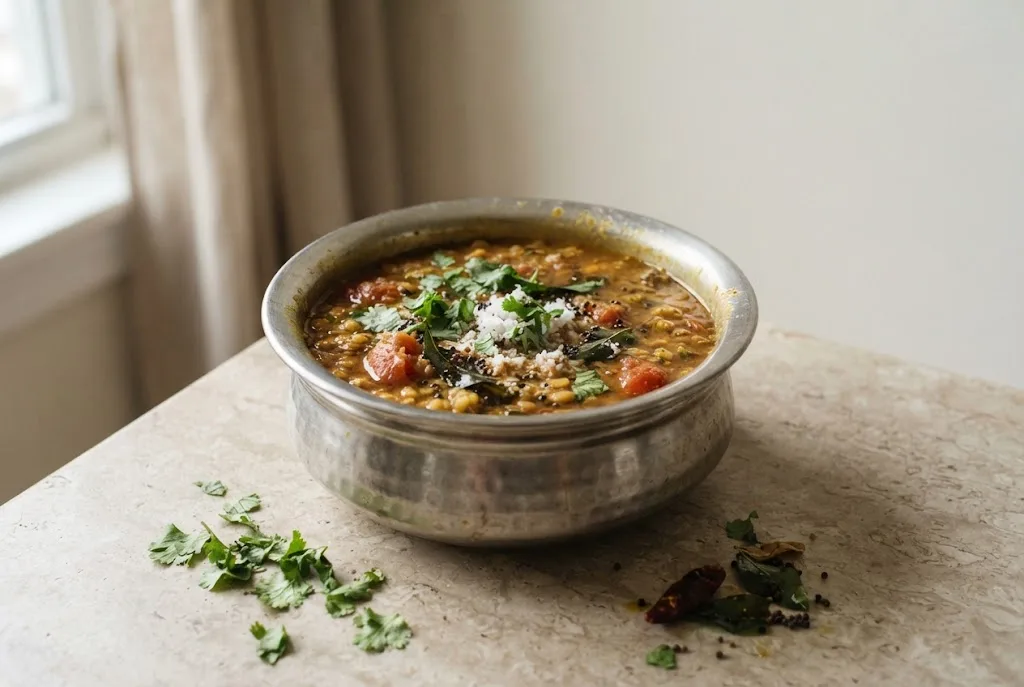
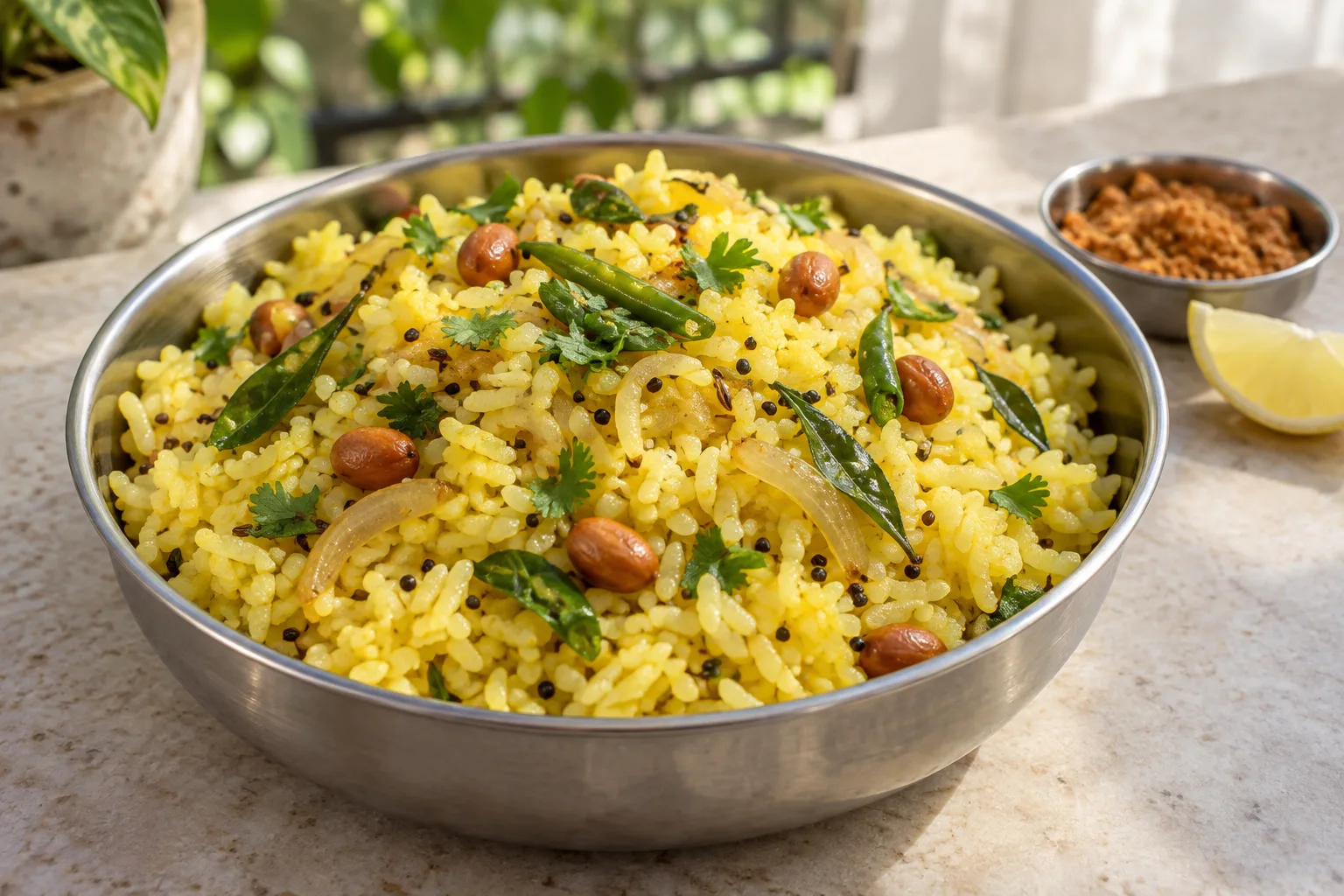
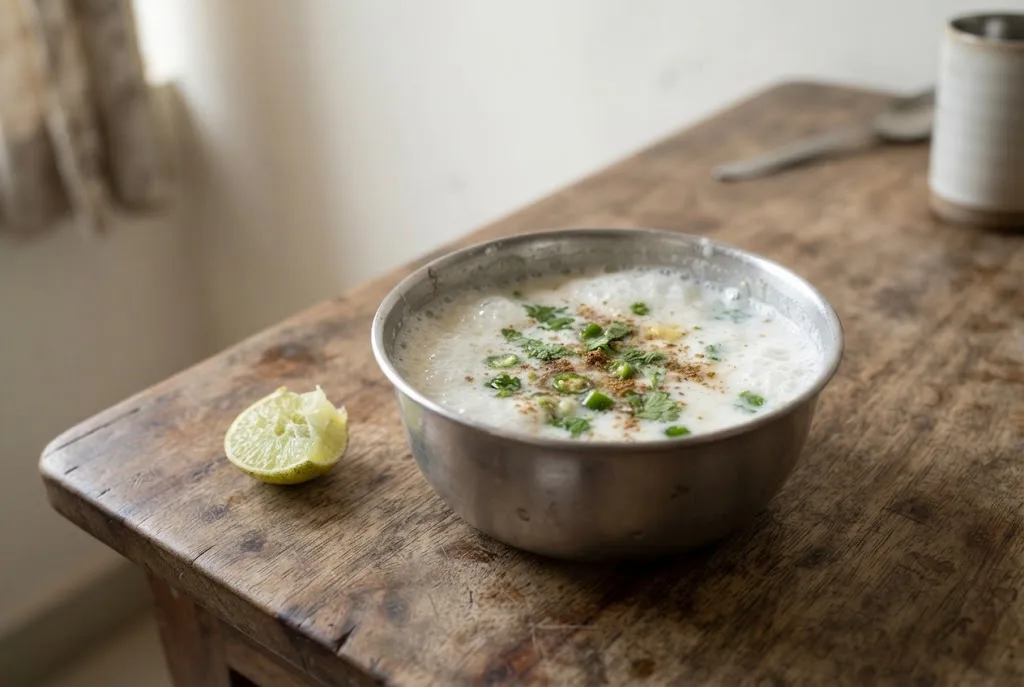
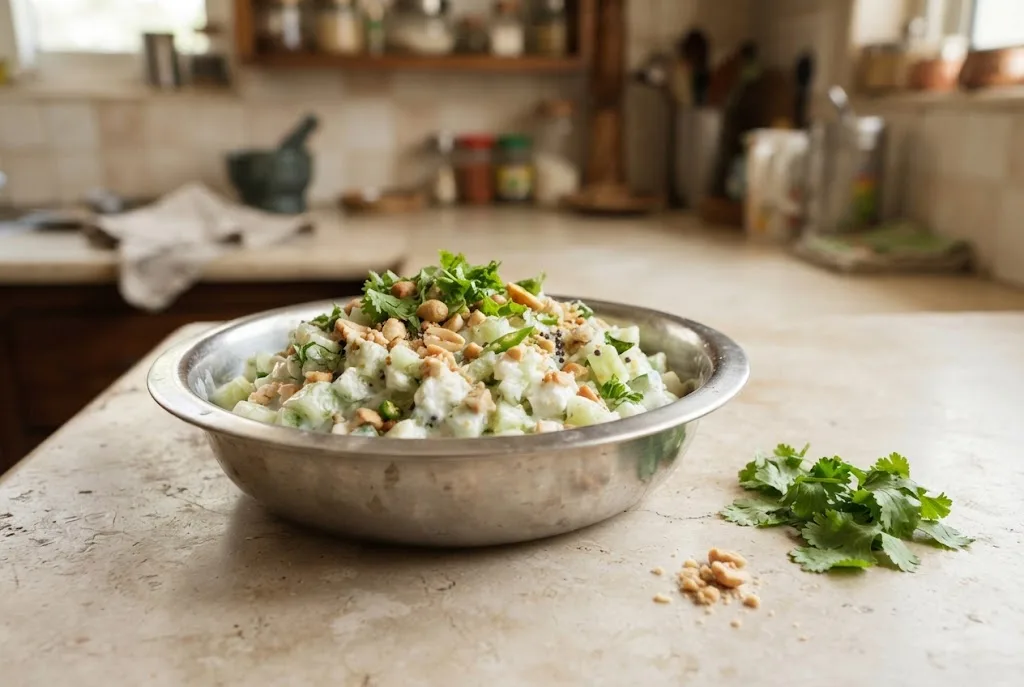
A West Indian dinner is a plate rather than a single dish. These are the courses that normally sit beside Batata Rassa (Thin Potato-Onion Gravy), read from the same composition Dinejot builds a real meal from.
-
The protein alongside
-
What it is eaten with
-
The sharp little thing
-
Something cool and fresh
Safe at your table
Dinejot tracks ten allergens and tags every one of them by hand, so the absences below are as deliberate as the presences. Batata Rassa (Thin Potato-Onion Gravy) carries sesame and coconut. It is free of the remaining 8 allergens on that list.
| Allergen | In this dish | Cook this instead |
|---|---|---|
| Peanuts | No | |
| Tree nuts | No | |
| Dairy | No | |
| Gluten | No | |
| Shellfish | No | |
| Eggs | No | |
| Soy | No | |
| Fish | No | |
| Sesame | Yes | Akoori (Parsi Spiced Scrambled Eggs) |
| Coconut | Yes | Akoori (Parsi Spiced Scrambled Eggs) |
These tags are set by a person rather than inferred from an ingredient list, and they describe the recipe as written here. Read the labels on whatever you actually buy.
What it brings to the plate
Estimated, per serving
- Calories
- 270 kcal
- Protein
- 4 g
- Carbs
- 33 g
- Fat
- 13 g
- Fiber
- 5 g
- Sugar
- 3 g
- Sodium
- 590 mg
- Saturated fat
- 3 g
Estimated values. Actual nutrition varies with ingredients, brands, and how you cook.
When to cook it
Batata Rassa (Thin Potato-Onion Gravy) takes about 25 minutes from a cold stove to the table, and the cooking itself is easy going. It is eaten at lunch and dinner. Nothing in the calendar rules it out, so it is a year round dish.
Cooked this? Show everyone.
Comments
Sign in to leave a note for the next cook.
No comments yet. Be the first to share your thoughts.
Cook this with your whole family
Dinejot plans breakfast, lunch and dinner as whole plates, built around the cooking you call home and filtered for the allergies at your table.
Meal suggestions support your goals. They are not medical advice. Please ask your doctor about your family's health needs.